Monday, August 18, 2025

Marginalist Bastards move center stage

I just finished Quinn Slobodian's new book, Hayek's Bastards. In parallel, I read another interesting book called The Marginal Revolutionaries by Janek Wasserman (Slobodian writes one of the blurb endorsements; Tyler Cowen says it is “the best overall history of the Austrian school”).

They cover slightly different things, but interrelated. Slobodian is looking at the alt-right, the paleo-libertarians, mostly in the United States (some discussion of the Alternative for Germany, AfD, and of Milei, towards the end), and the book is deeply steeped in the theories of Austrian and neo-Austrian authors, in particular since they did have a central role in the rise of both neoliberalism, and the more radical versions of market fundamentalism. The book by Wasserman looks at the history of the Austrian school, its eventual disappearance in its home country, and its development in the United States. Slobodian’s book is relevant in order to try to understand how the alt-right, or the radical right, in the United States, and to a lesser extent globally, has developed.

But at the same time, they have significant problems. I would say both books—particularly Wasserman's book—are more about what one may call gossip. In other words, they are about the relationships between the Austrians themselves, between them and the foundations that finance them, as well as the networks and connections that allow them to have political influence, with politicians and businessmen and wealthy donors. Wasserman spends a lot of time on the divisions and the fights, from early on, between Carl Menger and his disciples, like Böhm-Bawerk, or between Schumpeter and all the others, or between Mises and all the others (they were certainly a difficult bunch). However, one would not learn anything significant about the Austrian theory of capital, or its limitations (even if the topic is mentioned), from reading his book. To use Schumpeter’s useful distinction, there is a lot about vision, and almost nothing about analysis.

In the case of Wasserman, there is no significant  discussion of what theoretical assumptions connect and make Austrians “Austrians,” in a sense. The book goes all the way back to Menger and the developments that come after that, but it makes very little of the connection with the German Historical School (only the methodological debate emerges, but nothing about how many authors of the latter, like Knies, were closer to marginalism than it is often understood; the ties are significantly more important than is implied in the book which delves a lot on the clash between Menger and Schmoller).

Slobodian tries to connect, more deeply, his discussion of the many characters in the alt-right to what he sees as the main characteristics of the new right, on an analytical level, which he refers to as “the three hards”: hard money, hard borders, and hard-wired culture, which is to say, biological racism. Note that two of those are policy measures, not a fundamental analytical category. And biological racism derives from misconceptions about biology, not economics.

My fundamental problem with the two books is that they miss the point that the strength of Austrian economics, perhaps its main advantage, is that it is a non-formalized, more or less accessible version of neoclassical economics, of marginalist economics.* And that that is the foundation of the right-wing views of society, which hinge on the notion that markets do produce optimal outcomes (that is also at the core of neoliberalism). At the end of the day, right-wing policies are based on the notion that markets are efficient, and that government intervention, in particular, to promote some sort of income distribution, will create inefficiencies.

The notion that markets are efficient is not a notion that can be traced back to old classical political economy authors, like Adam Smith and David Ricardo, who were certainly for capitalism, for laissez-faire, and for free markets in general, but for very different reasons than modern neoliberals. There was no notion, in classical political economy, that markets produced an efficient allocation of resources—certainly not labor, meaning full employment of labor; not even in their version of Say's Law. Nobody would have thought that in 18th or early 19th century England that markets produced full employment. The concern with unemployment is from the end of the 19th century. Fabian Socialists and reformists New Liberals were concerned with that. That is one of the key presuppositions of neoclassical economics, efficient allocation of resources, of marginalism, which appeared at that time.

As I noted somewhere else, Austrians are the fundamental basis of neoliberalism. Why? Because while Cambridge neoclassicals—early marginalists from Jevons to Marshall to Pigou—did believe that markets produced optimal outcomes, in terms of policy, particularly Pigou, but to some extent Marshall too, thought that market failures (they didn't use that term) implied that under certain circumstances, government intervention was acceptable. That is the basis of Pigouvian taxes, and the Marshallian notion of externalities plays a crucial role in all of that.

The Austrian school is exactly the one that suggests, first, that markets do produce optimal outcomes and an efficient allocation of resources, in the same way as the British marginalists and the School of Lausanne (Walras and Pareto, and so on). But at the same time, and contrary to the Cambridge marginalists, they believe that government failures (another term not used at the time) are more important than market failures, and therefore, that government intervention is always a bad thing. So, in that sense, it's neoclassical economics and marginalism that are at the core of the alt-right, and the importance of Austrian economics is that they push that argument—Hayek's bastards, if you will—to the extreme. Murray Rothbard (not Milei's dog) plays a crucial role in all that.

In that sense, the “three hards” of the alt-right are not particularly new and not necessarily defining, although certainly many people on the modern alt-right do believe in those three things. I’m not sure one should discount neoliberals that are not biological racists from this group, for example. Cultural racists will do too.

But those three things do not necessarily constitute the foundation upon which they build their arguments. Hard money and hard borders can be defended on the basis of significantly different theoretical views. For example, Ricardo, back in the 19th century, was for hard money, but for reasons that were different from the somewhat monetarist views of modern Austrian economists. They also have some sort of notion of stateless money, in their Bitcoin version and whatnot, which Hayek sort of pushed (but that's another issue). Old Institutionalists like Ely or Commons were for closed borders, and they and other Progressive reformers were certainly not right wingers. Note that those three things—hard money, hard borders, and a scientific racism—were things that Social Darwinists like William Graham Sumner held back in the 19th century. Which would make the alt-right a 19th century phenomenon. Btw, Sumner was a proto-marginalist (Marx’s would probably have classified him as a vulgar economist).

I think the theoretical basis of the right (alt or not) is in neoclassical economics, even though not all neoclassicals are right wingers (far from it). Also, the basis for the alt-right, and the rise of the more radical ideological version of the right-wing should be seen in the long period of increasing inequality and lower growth that started in the 1970s. That is missing in these books. In other words, I would have liked more analysis and less discussion of ideological views.

PS: A lot of the same stuff on the rise of the right in the US is covered in Brian Doherty's Radicals for Capitalism: A Freewheeling History of the Modern Libertarian Movement, cited once in Slobodian's book. I recommend it too, with these two books.

* As such, and there is no doubt that Austrian economics is marginalist (it's in the title of Wasserman's book) and is part of the mainstream (which is neoclassical), even if they were (which they are not) fringe from a social point of view. Austrians are NOT heterodox, no matter what Wasserman or others suggest. Also, I should note, as explicitly discussed by Wasserman, Austrian held positions at Harvard and other elite universities, were close advisors to governments and international organizations, and received financial support from donors and foundations, besides the ultimate accolade, the Bank of Sweden Economics Prize in Memory of Alfred Nobel (to Hayek). In other words, not so fringe after all. That notion is part of a culture of victimization.

Friday, August 15, 2025

The World Upsidedown: Progressives and the Return of the Victorian Policy Consensus


Was Larry Summers Right All Along?

Eminent Victorian? 

The complete shitshow that US trade policy has become has led to a paradoxical result. Many progressive critics of Free Trade have all of a sudden become strong defenders of it, and highly critical of any kind of trade policy intervention. If Trump is against free trade, then it must be good. On top of that, the fear of inflation -- always a recurrent paranoia among more conservative policy makers -- has been exacerbated by the perception that tariffs will cause stagflation, and has led to a concern that Jerome Powell, the Federal Reserve (Fed) chairman, might be fired by Trump, even if that is more complicated than firing the Commissioner of the Bureau of Labor Statics (BLS). This, in turn, has led to some strong defense, by liberals and progressives, of an independent Fed.

Free trade and rule based monetary policy (at least not the Gold Standard) are back on the agenda. I should say many liberals, with strong influence among the establishment of the Democratic Party, are also not far from defending some degree of austerity after what they perceive as the excesses of Biden's fiscal policy. In that case, it would be a return to the policy consensus of the Victorian era, free trade, rule based monetary policy, and fiscal discipline. A setback, given that the profession was, not long ago, rethinking the so-called New Consensus in macroeconomics, and was moving away from more rigid inflation targeting, with the Fed adopting a more flexible approach, and more acceptance that persistent deficits and even a higher level of debt were not unsustainable.

It is clear that the tariffs will not bring back any significant number of manufacturing jobs back to the US (a longer discussion here; bottom line, wages are still high in the US, and production will shift to other places), but it is also true that trade policies, together with government procurement policies do play a strategic role in promoting technological innovation and economic growth. But the arguments have gone considerably beyond that. On the international arena, the paranoid style in economic policy advising suggests that the tariffs will bring the end of US hegemony, not just some adjustments on supply chains. It will bring a run against the dollar and dollar denominated assets. If it needs repeating, there is no risk to dollar hegemony, even if China has challenged US hegemony in some crucial sectors.

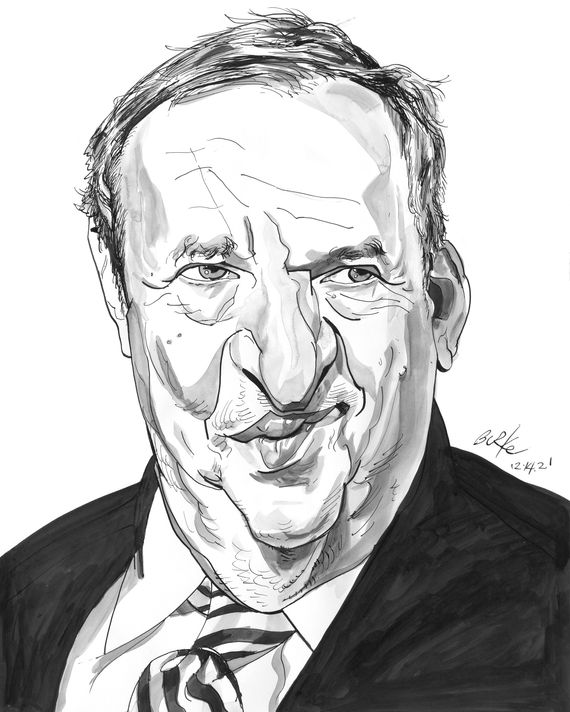
The next exaggerated fear is that tariffs will bring stagflation. On that, as I have discussed here (and here for Pandemic fears, that proved unfounded, notwithstanding Larry Summers' predictions; note that he blames Biden, and not pandemic supply-side shock for the 2022 inflation bout*), the risk of inflation, let alone high inflation, is relatively moderate. Sure enough tariffs will have some impact on the price level, but as much as the snags on the supply chain during the pandemic, this would translate only as a moderate and transitory shock, that will vanish fast. Actually, since the economy is slowing down, and wage bargaining has been eroded even further (on top of that with the weakening of the National Labor Relations Board), chances of inflation acceleration should take a back seat.

The risk of a recession does NOT come from the possible supply-chain problems that tariffs could cause, nor from the uncertainty (that vague and lazy way of saying that anything could happen; the uncertainty fairy), and neither from a possible profit squeeze that would lead to declining investment. It is actually, as I noted recently, the persistent of relatively high interest rates. Trump is NOT incorrect in criticizing Powell on this issue (the form might be wrong, but on substance he is correct). The housing market is affected, and that will have an impact on consumption, and that might cause a recession.

Further, many authors that used to correctly see the fiscal problems, at least temporarily, as secondary, are now concerned with the sustainability of US debt in domestic currency. Something that is absolutely irrelevant even if all three credit agencies have downgraded US public debt (that's material for another post).

Faced with Trump's economics agenda progressives have retreated from the policies that, at least on a conceptual level, were being developed after the 2008-9 financial crisis, policies that endorsed fiscal activism, unconventional monetary policy, and a healthy rethinking of industrial and trade policy (the latter mostly after Trump's first election, and Biden's so-called New Washington Consensus). Not only the notion is that fiscal policy was excessively lax, causing inflation, that monetary policy must remain contractionary, to avoid the inflationary pressures of the tariffs, but also that free trade and is central for US hegemony.

Edward Luce, FT columnist (and former speechwriter for Summers), author of The Retreat of Liberalism (a book that equates free markets and Western democracy with development) now tells us that the main sin of liberalism (which should be taken here in the American sense of progressivism, and not libertarian free market dogma) is intolerance. The excessive reliance on science during the pandemic, and the lack of free speech in academia, the press, and society at large. He sees that as a return to the Victorian era. In his words:

"... today’s liberal establishment looks more like a conservative one. Educated elites confect orthodoxy on what we should say and do. The resemblance to high Victorianism is more than passing. Victorians regulated manners and etiquette. They also dreaded the mob."

He is not completely wrong. The current liberal establishment, of which he is a member, resembles the Victorians, but it is in the renewed defense of an outdated economic policy consensus, free trade, hard money, and sound finance.

* In this interview Summers says: "I felt that the Biden administration was failing to pay attention to fairly elementary economic arithmetic with respect to the excessive stimulus that it launched in response to Covid. But in that case there was a logic in terms of insurance, adding to confidence and promoting employment. That was a policy with both benefits and costs, where I felt—and I think it has turned out this way—the costs exceeded the benefits. Here [Trump's policies] it seems like it’s almost all cost with very little benefit."


Tuesday, August 12, 2025

Post Keynesian economics and academic freedom

Tom Palley wrote a short post on his recent experience with the Post Keynesian Economics Society (PKES). The post raises interesting issues about what constitutes an economic topic and where to draw the line between academic and non-academic work. A similar debate recently occurred on the listserv of the Union for Radical Political Economy (URPE) regarding an announcement about the Gaza conflict (specifically, whether it constituted genocide, whether URPE should have a statement on the topic, and so on).

On the two main topics of Tom's piece -- what constitutes an economic related topic, and what is an academic subject -- I should say that I tend to think that there are relatively clear answers (and my views might not be hegemonic, in this field; see what I did there?). I come from a political economy tradition, that harks back to classical political economy, according to which economics is about the material conditions for the reproduction of society, in which social classes, and the conflict between them are central not only for the determination of distribution, but also of the pace of accumulation and progress (another question open to debate).* Hence, issues related to Ukraine and Palestine, and other geopolitical issues are certainly part of political economy, and it is hard to suggest that they should be excluded from conversation.

On the other, whether something can be consider academic or not, at least from a sociological point of view, is entirely determined by peer review, what economists doing academic work in economics define as academic work. In this case, what Post Keynesians (PKs) considered PK economics to be. From that point of view, and regarding PKs, it seems clear that the issues of the war in Ukraine, that Tom was discussing (whatever the views on that were), would have always been seen as part of the tradition, and a perfectly reasonable topic of inquiry. Just to provide an example, in the second issue of the Journal of Post Keynesian Economics (the journal that gave the name to the tradition), Charles Issawi had a long discussion of the Arab-Israeli conflicts to understand the 1973 oil shock (there are other papers in that issue on similar topics).

Mainstream economics always took a dim view of PKs willingness to entertain issues that were hard to formalize. Robert Solow famously said that:

"The proper way to do macroeconomics can hardly be all historical context and no analytical structure. Unfortunately the school has provided no systematic description or example of what it conceives to be the right way to do macroeconomic theory. Thus far so-called post-Keynesianism seems to be more a state of mind than a theory." 

Note that, while critical of PKs, Solow was not for the exclusion of PKs from conversation, and he was always willing to discuss with heterodox economists (on this see my short piece on his relation to ROKE on the occasion of his death).

In other words, the post by Tom was on economics on a topic that PKs considered economics, at least ib the past.** For those reasons, it seems hard to justify the PKES decision, which appears punitive and an attempt to stifle conversation, the sort of thing they persistently criticize about the mainstream. This is much worse given the current attack on academic freedom, particularly in the US, with Trump going after academia in general.

* For my views on heterodoxy, and its relation to that tradition see this old post, and this paper. On Post Keynesian economics see this old piece.

** Colin Danby reminded me of the old PK listserv that used to be more than announcement emails, and was effectively a forum for the discussion of ideas. 

Sunday, August 10, 2025

David Fields' heterodox economic manifesto

From the introduction:

"Mainstream orthodox economics, that is, marginalism, constitutes a hegemonic dogma. This has resulted in significant fragmentation and diminishment of intellectual horizons, leading to the systematic neglect of alternative, more perspicacious approaches and, thus, oversight of the real-world. Consequently, the discipline, despite its assertions of scientific rigor, proves inadequate in addressing the most pressing societal challenges, namely, sustained and avoidable economic hardship, manifested by pervasive unemployment, underemployment, discrimination, alienation, income inequality, ecological disaster, war, genocide, and poverty, to name a few.

A manifesto is essential, one that articulates heterodox economics as the potent, reality-grounded alternative. This approach is predicted on a fundamentally different understanding of economic reality, knowledge acquisition, and practical action aimed at fostering a socially just world that maximizes human potential. Fundamentally, it endeavors to synthesize and integrate ideas to forge a more comprehensive and efficacious economic science."

Read rest here. 

PS: My own take on the subject here. 

Friday, August 8, 2025

Rethinking the determination and long-run evolution of income distribution

New paper by Thomas Palley. From the abstract:

This paper presents a theory and model of long-run cycles in income inequality. The model explains the historical pattern of income distribution identified by Kuznets (1955) and Piketty (2014). It breaks with conventional marginal product theory which claims functional income distribution is determined by the technological conditions of production. Instead, it emphasizes the role of socio-political forces that shape and drive fluctuations in the level of popular political organizations, which then impact distribution. That impact includes assessment and attribution of productivity contributions. The model provides a framework for interpreting the historical evolution of income distribution and inequality, and for reflecting on current conditions and possible future developments. The core message is twofold. First, socio-political developments matter for income distribution. Second, if those developments are cyclical, income distribution will also exhibit cyclicality.

Read paper here.

Thursday, August 7, 2025

Argentina: Chainsaw economics, dead dogs & Milei mayhem | Mehdi Hasan & Diana Mondino | Head to Head

I was on the show as part of the panel. It is hard to explain that Argentina cannot grow much under the current circumstances, with an external constraint that is binding.

Monday, August 4, 2025

More on the likelihood of a recession (and its causes if it happens)

If everybody was predicting a recession before the employment numbers last Friday,* now it has become an unanimity. The story is of course the uncertainty caused by the tariffs and the collapse of investment (a second story, far behind in popularity, is that profit squeeze, also caused by tariffs to some extent, caused the decline in investment). I should note that most stories in the press are vague about the mechanism for the recession. But when pressed most people fall into the uncertainty story.

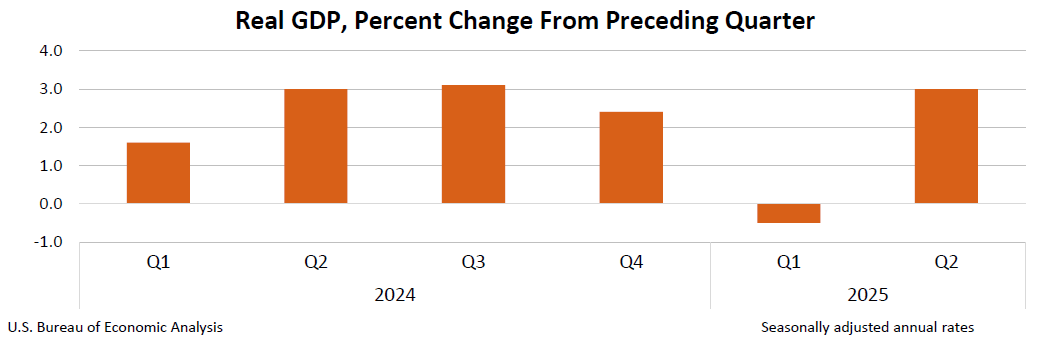
First, let me discuss briefly the numbers. GDP grew significantly in the second quarter, if one looks at the BEA Report, also released last week, at 3% (see figure below). Of course, as noted before, when the numbers of the first quarter come out, the whole story was in the import numbers. Huge increase in the first quarter (imports subtract from GDP, making growth negative), and large decline now, explaining the growth spurt. As noted before, in that same post, GDP is simply slowing down. Ray Fair has suggested that in the last forecast of his model, before the election last year. No surprises there.

 Real GDP: Percent change from preceding quarter

A better way of looking this is that growth is slowing down after a spurt that was caused by the rapid -- and I must add, bipartisan -- increase in spending after the pandemic, and the infamous (worst mistake in 40 years, according to Larry Summers) US$ 1.9 trillion fiscal package. The economy is sliding into lower rates of growth, now a little below 2% (see below).

Why was GDP slowing down, and even Fair forecasts suggested that before Trump's election victory, one might ask. The reason is that the fiscal expansion had basically given way to a less expansionist stance, and monetary policy had been tightening over the last two years. In fact, the most troublesome part of the two BEA reports this year is the slowdown in the government spending contributions to economic growth (negative in the first quarter, and only slightly positive in the second; and consistently negative at the federal level), with a large fall on non-defense spending in the second quarter (see this table).

Again, whether this would eventually continue is to be seen. It seems that the DOGE/libertarian wing of the GOP has lost internally, but the Big Beautiful Bill was more about cutting taxes (for the wealthy; and spending for the poor) than about expanding spending (even defense spending). This is not exactly Reaganomics (I'm not even talking about the tariffs).

The other thing is the effects of interests rates, which the Fed had also kept in place a couple of weeks ago, prompting lots of insults from Trump, and a renewed defense of the central bank by many progressives (I need to write about the new breed of Free Trade/Central Bank Independence progressives). As I have discussed before, a key variable here is Private Residential Fixed Investment, shown below. As I noted before, only four times this variable became rate of change was negative and a recession did not follow (In the early 50s, because of the Korean War, the late 60s, because of Vietnam, the early 90s, with the dot.com bubble, and in 2023, as a result of Biden's fiscal package, only possible in the post-pandemic context). Now this is again moving dangerously close to the negative space. This is where the big risk of a recession comes from. High interests that affect the ability of households to consume, that is tied to mortgage interest rates (which depend on the Fed policy rates). not surprisingly consumption has also grow sluggishly after an initial decline (even with wages at the bottom still growing more than inflation).


Interestingly enough, on this (and only on this), Trump seems to be right, and Powell wrong, even if you think that Powell is a decent man (I'm not sure anyone would be confused about Epstein... I mean, Trump). Lower interest rates would be important to avoid a recession. So it would be the case with a more robust round of spending on social transfers like we did during the pandemic. But that is certainly not happening. The mood has turned against fiscal policy, even among progressives. Not that there is any risk of a fiscal crisis. On this the MMT crowd is correct.

But as a conclusion: it is NOT the uncertainty of tariffs, or its effect on profits and investment (which is merely reactive to the level of activity). It is macroeconomic policy, or the mismanagement of the macro policy to be more precise, that might cause a recession.

* And yes, before anyone says anything, it was nuts to fire the BLS head. I doubt, however, that he will be able to cook the numbers, and think that even with a crony (I hope not) the BLS is a strong institution that will basically report the numbers, as it has done so far. 

Sunday, August 3, 2025

The United States’ Unchallenged Hegemony in the World-System

 American hegemony or American primacy? | World Finance

By David Fields

A prevalent assumption concerning the United States’ global position posits precipitous hegemonic decline. Conventional wisdom, predominant since the 1970s, suggests that the U.S. has been on the verge of losing its preeminent status, as evidenced by the collapse of the Bretton Woods system and the subsequent emergence of the Eurozone, BRICS, and the spectacular rise of China. Proponents of this view tend to interpret U.S. current account deficits as an unsustainable imbalance, predicting a hard landing scenario resulting from resoundingly widespread divestment from dollar-denominated assets. Similarly, academic and political anxieties regarding a more disorderly international system, often linked to a perceived weakening of U.S. influence, are further amplified by recent fascist political rhetoric of “America First”.

To construct an effective critique of U.S. imperialism, it is pertinent to ascertain that the United States is not experiencing a significant hegemonic decline; its structural power within the capitalist world-system persists without substantial challenge.

Read rest here. 

Monday, July 28, 2025

Capital controls in the US?

financial Archives - Glasbergen Cartoon Service

In a recent Financial Times op-ed, Michael Pettis argued that the US should impose capital controls. In his view, the traditional view according to which capital inflows necessarily lower domestic interest rates and spur productive investment is based on a misunderstanding of how capital flows affect modern economies. This might have been true for rapidly growing developing economies with high investment needs and limited domestic savings, where foreign capital truly relieved a saving constraint. However, since the breakdown of the Bretton Woods system, modern financial systems can expand credit largely unconstrained. In this environment, capital inflows into advanced economies like the US, do not primarily finance new, productive investments.

In the modern context, capital inflows often lead to an increase in household or fiscal debt. Policymakers use this credit growth to sustain domestic demand and prevent recessions that would otherwise be caused by the leakage of demand abroad due to trade deficits. This is a "beggar thy neighbour" dynamic -- a term coined by Joan Robinson, and the reason she appears in the FT piece, even though she was referring to competitive depreciation and trade restrictions, not capital flows -- where trade deficits are caused by shifts in spending to foreign goods, forcing domestic businesses to reduce output. Further, this reliance on rising household or fiscal debt to absorb foreign capital inflows and the resulting trade deficits is unsustainable in the long run. It leads to rising debt levels and distorted economic structures. He concludes that restricting capital inflows would directly address the problem of aligning a country's external position with its domestic needs.

There are many problems with these views. On a theoretical level, he does suggest, as Vicky Chick in a paper that Lance Taylor liked and used in his courses, in the earlier period savings was necessary for investment. Essentially Say's Law. That is certainly not the case. Even in the 19th century, with less developed financial markets, banks had the ability to create credit, and savings (a flow) did not finance investment. Also, interest rates do not depend on the capital flows and the available funds, and are essentially an exogenous variable controlled to a great extent by the monetary authority (that was true in the past too).

More importantly, it is unclear that the external situation of the US, indebted in its own currency is unsustainable. What is the problem that this would be solving? There is no fiscal problem either, irrespective of the downgrade of US debt by Moody's recently (Standard & Poor's and Fitch had done it years ago). In fact, capital controls would affect the international role of the dollar and would be a major misstep, since it would directly affect the ability of foreigners to use dollars, and restrict its use in international financial markets. Not that this would have any chance of happening with Bessent, a Wall Street operator, as Treasury Secretary.

Private debt (not public) is considerably more dangerous than public debt, since when the government gets indebted, if it uses the money to promote growth, it directly affects its ability to pay back the debt, since its revenue is tied to the level of economic activity. That is why public debt tends to fall not by cutting spending and promoting adjustment and reducing the amount of debt, but by promoting growth and reducing the relevance of debt with respect to ability to repay. So, Pettis is not incorrect in noting that the US has depended more on private debt, which is riskier. But capital controls would do little to limit this dynamic. Policies that expand the remuneration (wages) of the people at the bottom (i.e. better income distribution) and that are more lenient with private debtors would have better results.

Regulation of financial markets too should play a role. In particular, the predatory lending practices that are still rampant in the US more than a decade and half after the 2008-9 financial crisis. But in all fairness, if there is something the US can do to grow faster and avoid financial problems, it would simply be more spending (perhaps a mix of infrastructure and social transfers) and lower interest rates. One can hope.

Saturday, July 26, 2025

A Bipartisan Neoliberal Offensive

By David Fields

Donald Trump’s fascist political ascent is not a mere historical anomaly or an unpredictable deviation from the norm. On the contrary, it represents a predictable and deeply entrenched political outcome, that is, the logical, albeit unsettling, culmination of a long-standing bipartisan reorganization of the United States political economy. This restructuring can be understood as a coherent and potent neoliberal project, meticulously designed to reorder American capitalism around the central tenets of maximizing corporate power and diminishing the role of the state in social welfare.

In pursuit of these objectives, this neoliberal project systematically dismantled the post-World War II social contract, characterized by relatively strong labor unions, progressive taxation, and the expansion of moderate social safety nets. It aimed to balance capitalist accumulation with, to a certain extent, social equity and economic security for the working class. Over time this foundational agreement was incrementally eroded. Policies favoring deregulation, privatization, free trade agreements, and supply-side economics dogma became paramount, leading to a significant redistribution of wealth upwards for the few and stagnant wages for the many. This long-term trend of prioritizing corporate interests over collective well-being created fertile ground for populist discontent and the rise of figures who, like Trump, could tap into widespread frustration with the established political and economic order.

Read rest here. 


Tuesday, July 1, 2025

Surplus approach, Historical Materialism, and precapitalist economies:

New Paper by Sergio Cesaratto on a topic closely related to what he has discussed here before. From the abstract:

In the classical economists’ surplus approach retrieved by Sraffa (1951; 1960) and Garegnani ([1960] 2024), institutions regulate the  material  basis  of  society  and,  in  particular,  the  extraction and distribution  of  the  social  surplus.  In  this  regard,  classical theory  provides  a  material  anchor,  alternative  to  neoclassical New Institutional Economics, to anthropological, archaeological and  historical  studies  of  precapitalist  economies.  Expunged  of any teleological meaning, Marx’s Historical Materialism (HM) is a   natural   source   of   inspiration   for   this   interdisciplinary perspective. The nature and dynamics of Marx’s notion of modes of  production  (MOP)  are  not,  however,  firmly  defined  and  have been  the  object  of  over-complicated  doctrinal  disputes  among Marxists. Since I am unable to provide a comprehensive overview of these debates, I will limit myself to a few aspects that seem to me to be most central or that best convey the issue. The question of MOP dynamics is the most relevant and complex. All in all, the most  mature  Marx  leaves  us  a  very  flexible  reading  of  HM  as  a method of connecting economic, social, and institutional history that can be broadly shared by non-Marxists.

Read the rest here. 

Why Latin American Economies Fail (in Spanish)

This was a talk for a group at the Colombian University together with the co-editor of the book of the same title published by University of California Press. On the discussion of Commons, which is not accepted by many Institutionalists go to this paper (which has other concerns, but shows clearly the marginalist basis of his views).