Eminent Victorian?
The complete shitshow that US trade policy has become has led to a paradoxical result. Many progressive critics of Free Trade have all of a sudden become strong defenders of it, and highly critical of any kind of trade policy intervention. If Trump is against free trade, then it must be good. On top of that, the fear of inflation -- always a recurrent paranoia among more conservative policy makers -- has been exacerbated by the perception that tariffs will cause stagflation, and has led to a concern that Jerome Powell, the Federal Reserve (Fed) chairman, might be fired by Trump, even if that is more complicated than firing the Commissioner of the Bureau of Labor Statics (BLS). This, in turn, has led to some strong defense, by liberals and progressives, of an independent Fed.
Free trade and rule based monetary policy (at least not the Gold Standard) are back on the agenda. I should say many liberals, with strong influence among the establishment of the Democratic Party, are also not far from defending some degree of austerity after what they perceive as the excesses of Biden's fiscal policy. In that case, it would be a return to the policy consensus of the Victorian era, free trade, rule based monetary policy, and fiscal discipline. A setback, given that the profession was, not long ago, rethinking the so-called New Consensus in macroeconomics, and was moving away from more rigid inflation targeting, with the Fed adopting a more flexible approach, and more acceptance that persistent deficits and even a higher level of debt were not unsustainable.
It is clear that the tariffs will not bring back any significant number of manufacturing jobs back to the US (a longer discussion here; bottom line, wages are still high in the US, and production will shift to other places), but it is also true that trade policies, together with government procurement policies do play a strategic role in promoting technological innovation and economic growth. But the arguments have gone considerably beyond that. On the international arena, the paranoid style in economic policy advising suggests that the tariffs will bring the end of US hegemony, not just some adjustments on supply chains. It will bring a run against the dollar and dollar denominated assets. If it needs repeating, there is no risk to dollar hegemony, even if China has challenged US hegemony in some crucial sectors.
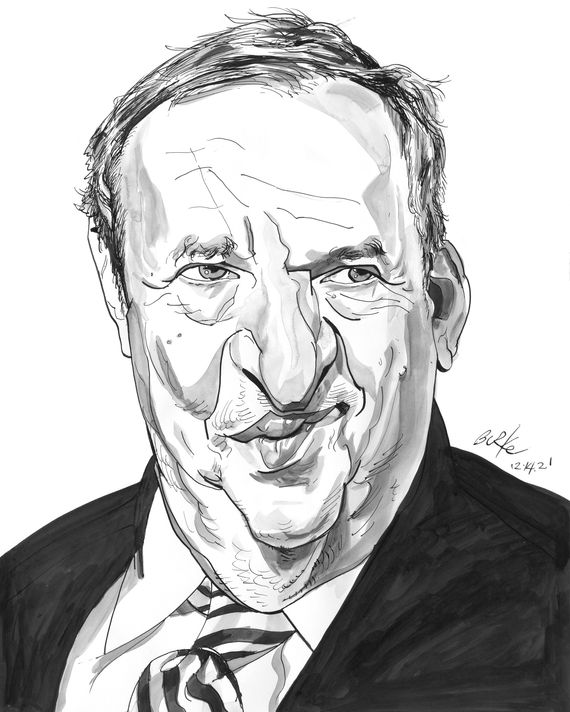
The next exaggerated fear is that tariffs will bring stagflation. On that, as I have discussed here (and here for Pandemic fears, that proved unfounded, notwithstanding Larry Summers' predictions; note that he blames Biden, and not pandemic supply-side shock for the 2022 inflation bout*), the risk of inflation, let alone high inflation, is relatively moderate. Sure enough tariffs will have some impact on the price level, but as much as the snags on the supply chain during the pandemic, this would translate only as a moderate and transitory shock, that will vanish fast. Actually, since the economy is slowing down, and wage bargaining has been eroded even further (on top of that with the weakening of the National Labor Relations Board), chances of inflation acceleration should take a back seat.
The risk of a recession does NOT come from the possible supply-chain problems that tariffs could cause, nor from the uncertainty (that vague and lazy way of saying that anything could happen; the uncertainty fairy), and neither from a possible profit squeeze that would lead to declining investment. It is actually, as I noted recently, the persistent of relatively high interest rates. Trump is NOT incorrect in criticizing Powell on this issue (the form might be wrong, but on substance he is correct). The housing market is affected, and that will have an impact on consumption, and that might cause a recession.
Further, many authors that used to correctly see the fiscal problems, at least temporarily, as secondary, are now concerned with the sustainability of US debt in domestic currency. Something that is absolutely irrelevant even if all three credit agencies have downgraded US public debt (that's material for another post).
Faced with Trump's economics agenda progressives have retreated from the policies that, at least on a conceptual level, were being developed after the 2008-9 financial crisis, policies that endorsed fiscal activism, unconventional monetary policy, and a healthy rethinking of industrial and trade policy (the latter mostly after Trump's first election, and Biden's so-called New Washington Consensus). Not only the notion is that fiscal policy was excessively lax, causing inflation, that monetary policy must remain contractionary, to avoid the inflationary pressures of the tariffs, but also that free trade and is central for US hegemony.
Edward Luce, FT columnist (and former speechwriter for Summers), author of The Retreat of Liberalism (a book that equates free markets and Western democracy with development) now tells us that the main sin of liberalism (which should be taken here in the American sense of progressivism, and not libertarian free market dogma) is intolerance. The excessive reliance on science during the pandemic, and the lack of free speech in academia, the press, and society at large. He sees that as a return to the Victorian era. In his words:
"... today’s liberal establishment looks more like a conservative one. Educated elites confect orthodoxy on what we should say and do. The resemblance to high Victorianism is more than passing. Victorians regulated manners and etiquette. They also dreaded the mob."
He is not completely wrong. The current liberal establishment, of which he is a member, resembles the Victorians, but it is in the renewed defense of an outdated economic policy consensus, free trade, hard money, and sound finance.
* In this interview Summers says: "I felt that the Biden administration was failing to pay attention to fairly elementary economic arithmetic with respect to the excessive stimulus that it launched in response to Covid. But in that case there was a logic in terms of insurance, adding to confidence and promoting employment. That was a policy with both benefits and costs, where I felt—and I think it has turned out this way—the costs exceeded the benefits. Here [Trump's policies] it seems like it’s almost all cost with very little benefit."


