Showing posts with label elections. Show all posts

Tuesday, September 27, 2016

Who won the debate?

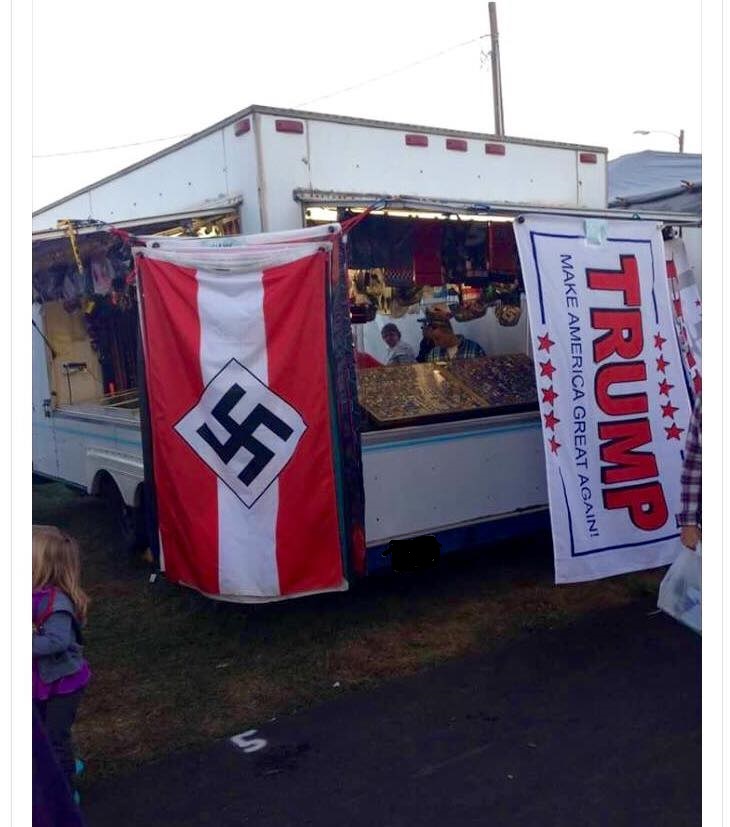
Making Merica Great!
(Stand at the Bloomsburg Fair, in central PA)

This is always a complicated question, since most people tend to think that their candidate won. And you may ask: who cares? After all debates have probably limited impact on the elections outcome anyway. But I think it is important to note that while most of the media (yes, I follow the liberal media) suggests that Hillary won (see here or here or here), one should take those results with a grain of salt.

I think the initial round on trade was clearly better for The Donald. Not only because he sounded more concerned with lost jobs, and deindustrialization in the Rust Belt, which he did (she said that she wants to bring back the 1990s; "I think my husband did a pretty good job in the 1990s. I think a lot about what worked and how we can make it work again..." were her precise words), but also because that is the main constituency for the debate. He was not trying to win the votes of African-Americans or Hispanics. That's why he double down on the law and order and nativist discourse. He wants the votes of blue collar workers in swing states, crucial ones in the old industrial belt. And he scored big there.

Also, while he actually gets his base excited, it's difficult to say the same about Hillary. And yes she sounds presidential. But the fact, that he doesn't sound presidential is what makes him appealing to his base. It's his strength not his weakness.

Winning the debate should be about that, who increased the chances of winning, and, if you ask me, he appealed to his base, and reached for blue collar workers for whom the economy has been terrible as he suggests, and for whom the 1990s Clinton policies that she thinks worked and can work again (hopefully not financial deregulation... or NAFTA, for that matter) were part of the problem.* The debate yesterday reminded me why I thought Bernie was the better choice, and I fear that's what many young (nope I'm not young anymore) progressives might have taken from it too.

Finally, it is important to note that almost everyone has been writing his political obituary since the election cycle started. His first answer, when he said he wouldn't support another GOP nominee was supposed to be the end. In the first debate. So most of the pundits saying she won now do not have a good track record. Even if many (not all, but some very visible, as per photo above) of his supporters are deplorables, it's worth noticing that their economic grievances are real.

Note that this doesn't mean he is going to win the election. Demographic changes make it harder for Republicans to win now, since Dems get more of the electoral college to start with. And I hope he doesn't, btw. But there are good reasons to be afraid. This is going to be way closer than it should be.

* The fact that she has not fully renounced Clintonomics, i.e. financial deregulation, austerity (End of Welfare as we know it) and free trade, is a problem for the progressive base of the party. She walked back some of these, mostly after pressure from the Bernie campaign, but is unclear that these changes would stick.

Tuesday, January 8, 2013

Lies, damned lies and The Economist

The World in 2013 by The Economist has been out for a while. Got it at the airport this weekend and read a few pieces. Really bad. Nothing new. One piece caught my attention though. On the fiscal cliff and the elections this terrible article says:
"Mr Obama will maintain that his victory, along with continued Democratic control of the Senate, constitute a mandate for his version of deficit reduction. But in fact the elections produced mixed results: Mr Obama narrowly won the popular vote and the Republicans retained their majority in the House of Representatives."
First, facts; yes the GOP won the House, but Democratic House candidates won more of the popular vote than their Republican counterparts. Redistricting or Gerrymandering is what explains this failure of democracy. Dems probably need more than 55% of the popular vote to win the majority in the House.

Note also that with a much thinner victory in 2004, Bush actually claimed he had a mandate, and proceeded to try to privatize Social Security, which was eventually a failure (because even the GOP base doesn't want that). Bush won with a margin of 2.4% of the votes (the second one; the first one was 5 to 4), while Obama won re-election with a 3.8% advantage. Obama had 51% of the vote while Clinton in 1996 had only 49.2% (Perot took votes from the GOP, and the margin of votes over Dole and Perot was just 0.1%; yes 0.1 not 1%!). And some people suggest that if not for the Lewinsky affair Clinton would have privatized Social Security.

So if anything this election produced a clear result, not mixed, for Obama and in favor of maintaining social spending and the Keynesian policies stimulating the recovery, with higher taxation on the rich at the top of the agenda. The deficit, as several polls have shown, was not an issue. The only bad thing about the fiscal cliff deal was the increase in payroll taxes. But The Economist has a different view.

The second, and by no means less important, lie spread by The Economist is that: 
"a long-term fix to America’s big deficits, [requires changes to the] rickety tax code and ballooning spending on 'entitlements', meaning the federal government’s health-care and pension schemes."
If you believe this Social Security is spending should be ballooning.  Hardly the case. See the graph below, with the mains spending categories as a share of GDP (data here).
Note that the only that is really increasing throughout the whole period is health spending (blue line). Welfare spending has gone up during the crisis, and interest spending down, and they should reverse in a few years when the recovery is complete (welfare spending is already way down from its peak). Social Security spending too increased a bit, but not much (and is actually in surplus now) since the crisis, and the reason is that people that can't find jobs and can retire tend to do it. Defense spending has expanded considerably after the two wars, and is the only kind of spending that was not caused by the recession.

On health spending note, however, that the countries that spend less, and have as good health outcomes as the US or even better, are those with a public health option. At any rate, note that this notion that the US has an entitlement problem is bogus, as much as Obama's narrow victory and need for a compromise. If anything he fell short of his promises and should had delivered a long term solution for health spending, i.e. the public option.